

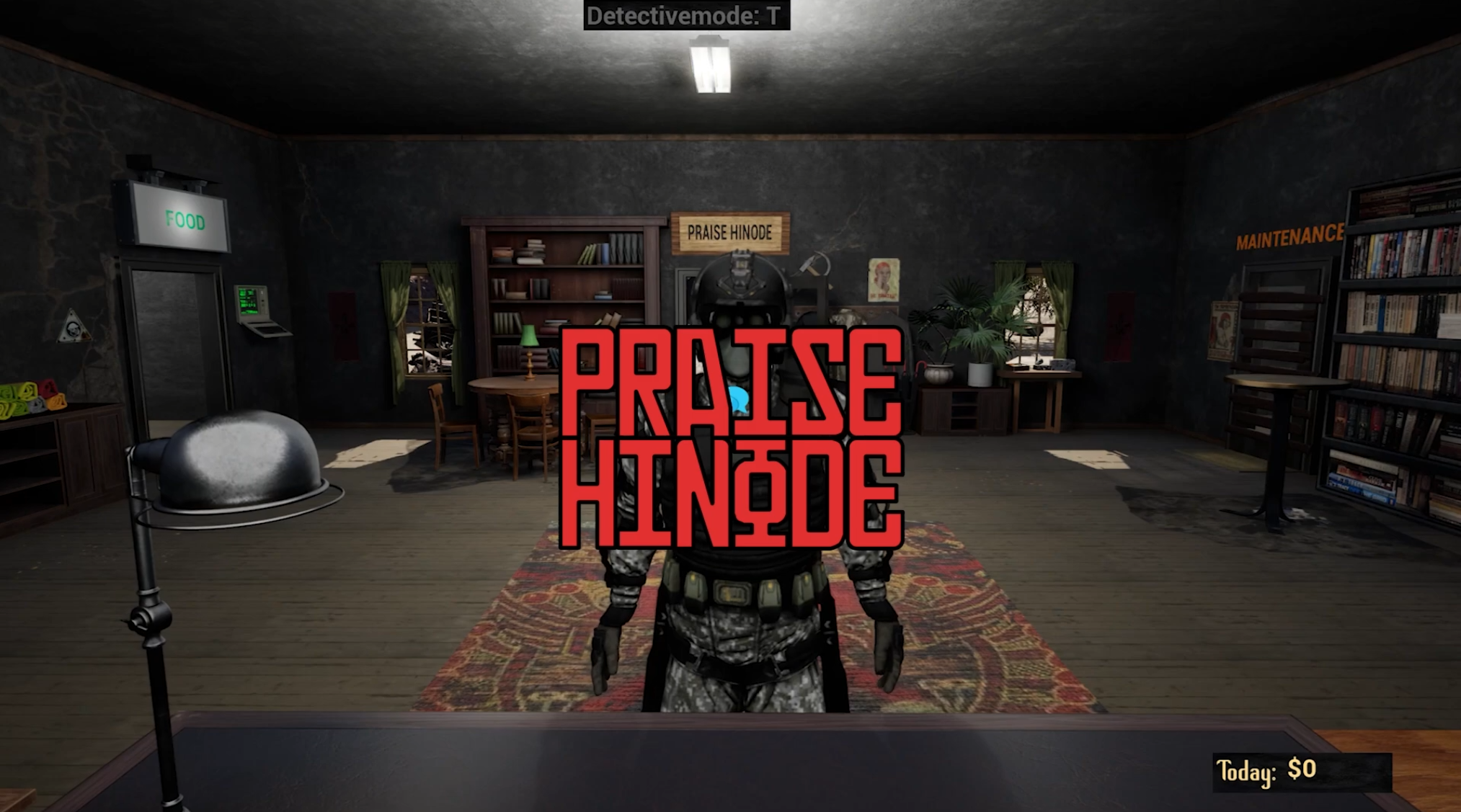
Short Description
PRAISE HINODE (heavily inspired by "Papers, Please") is set in a post-apocalyptic world. The protagonist finds refuge in one of humanity’s last strongholds: Hinode. Hinode is ruled by a corrupt and morally questionable regime. The protagonist is assigned to take over a new post at Hinode: the distribution station, which is supposed to contact the people living in the surrounding area and supply them with provisions. The player must follow strict instructions in order to earn enough money to support their family.
Background
The main focus of this project was the challenge of creating a complex dialogue system. Before this project, I often had trouble creating dynamic UI elements, so I thought a very dialogue-heavy game might push me out of my comfort zone of very simple UI elements and help me with my UI problems in the future. I also absolutely wanted to have a finished project for my portfolio before 03/01/2025. I set myself a very clear schedule: 01/01/2025 – 01/31/2025 implementation of all important features; 02/01/2025 – 02/28/2025 art/design + polishing.
Gameplay
- At the start of each day (from day 1 to 4), a security staff NPC approaches the player and explains the new rules that must be followed. If the player breaks the rules (example: an NPC asking for food may only enter the food storage room after a decontamination shower; the player sends the NPC into the food storage room without a decontamination shower despite high contamination -> rule broken), the player loses money that is needed to keep their family alive. If the player discovers a problem / discrepancy in the NPC’s values, they can confront the NPC about it in Detective Mode (T key) by marking the two objects that reveal the issue in Detective Mode (example: NPC’s contamination value is too high: the player marks the contamination scanner and the note showing the allowed contamination value -> the player can confront the NPC, send them away, or assign a decontamination shower).
- Day 1: Food distribution. NPCs can come to the distribution station and ask for food. The player must use a contamination scanner to check the NPC’s contamination value and decide whether they may enter the food storage room or not. In addition, the player can choose to let up to 3 NPCs take a decontamination shower per day. The day also ends early because an NPC breaks into Hinode through a door.
- Day 2: Recruitment. From the second day on, NPCs can be recruited if they request it. The NPCs must complete a recruitment test and then return to the player to present their results. The player must review the test and decide how to proceed with the NPC (passed -> recruit; failed -> send the NPC away). In addition, from the second day onward there are 2 security staff NPCs in the player’s room. Some NPCs will not listen to the player’s instructions; the player must then lock down the room the NPC wants to enter and command one of the security staff NPCs to escort that NPC out.
- Day 3: Water distribution. From the third day on, NPCs can also ask for water. The player must check whether the NPC’s water stamp is authentic and still valid.
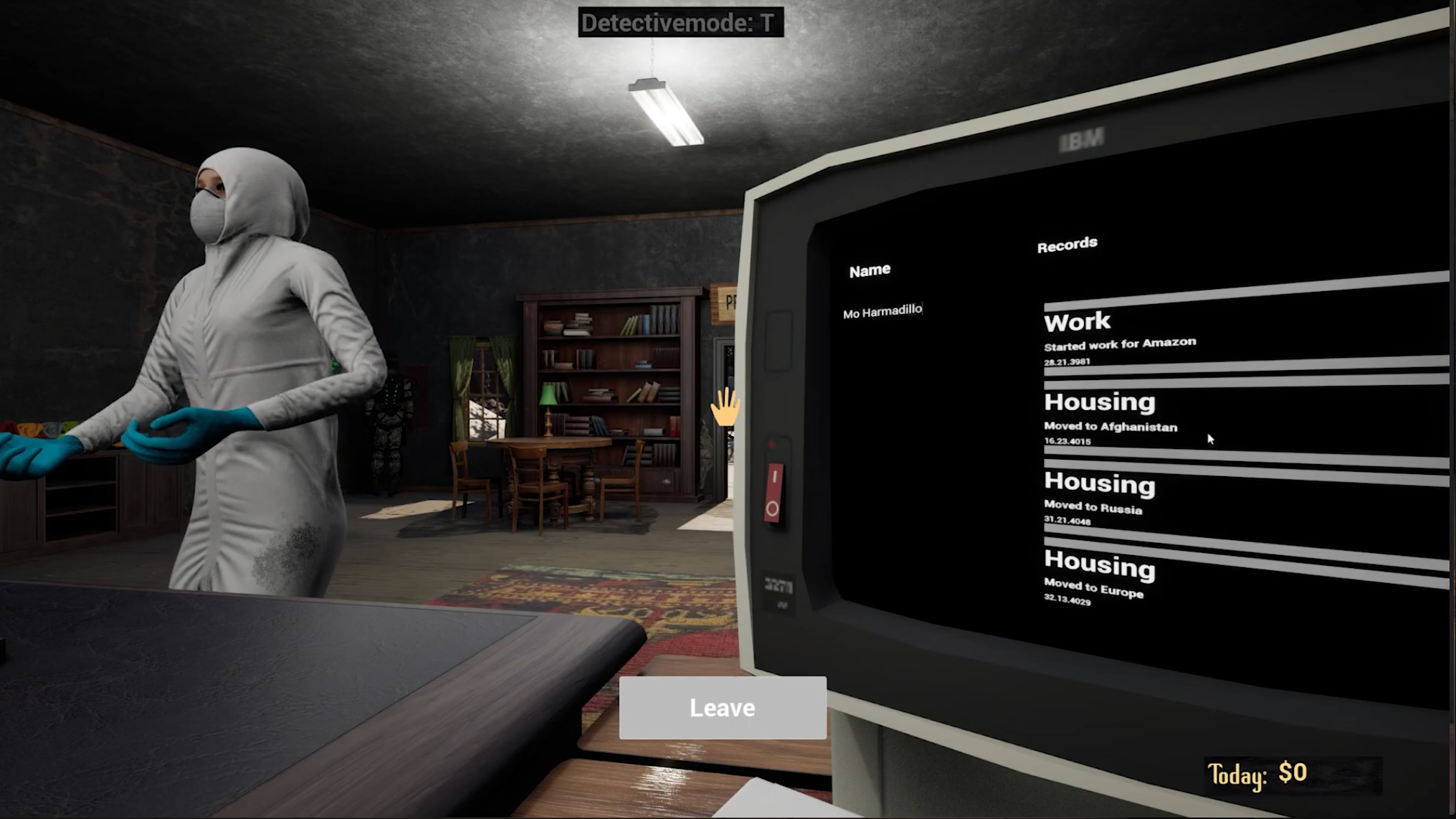
- Day 4: Data terminal. From the fourth day on, the player can check a database at a terminal. Every NPC must be checked to see whether the database contains entries about them that should deny access to the requested resources (example: NPC wants food -> possible database entry: "Tried to poison our food! Deny access!").
- At the end of each day, an overview of the family’s status appears. Food, water, electricity, heating costs, and possibly medicine must be paid for every day. If there is no longer enough money for one of these things, there is a chance that random family members will receive corresponding negative conditions (e.g. heating costs not paid -> "cold", not paid again -> "freezing", not paid again -> "sick"). After this overview, the day ends and the next one begins.
- Before the next day properly starts, the player can still read the current newspaper to find out what happened in Hinode the day before. There they can see which NPCs made an impact (e.g. "Leopold Ptieza" repairing waterworks, etc.).
Features
Resources / Checks
Contamination
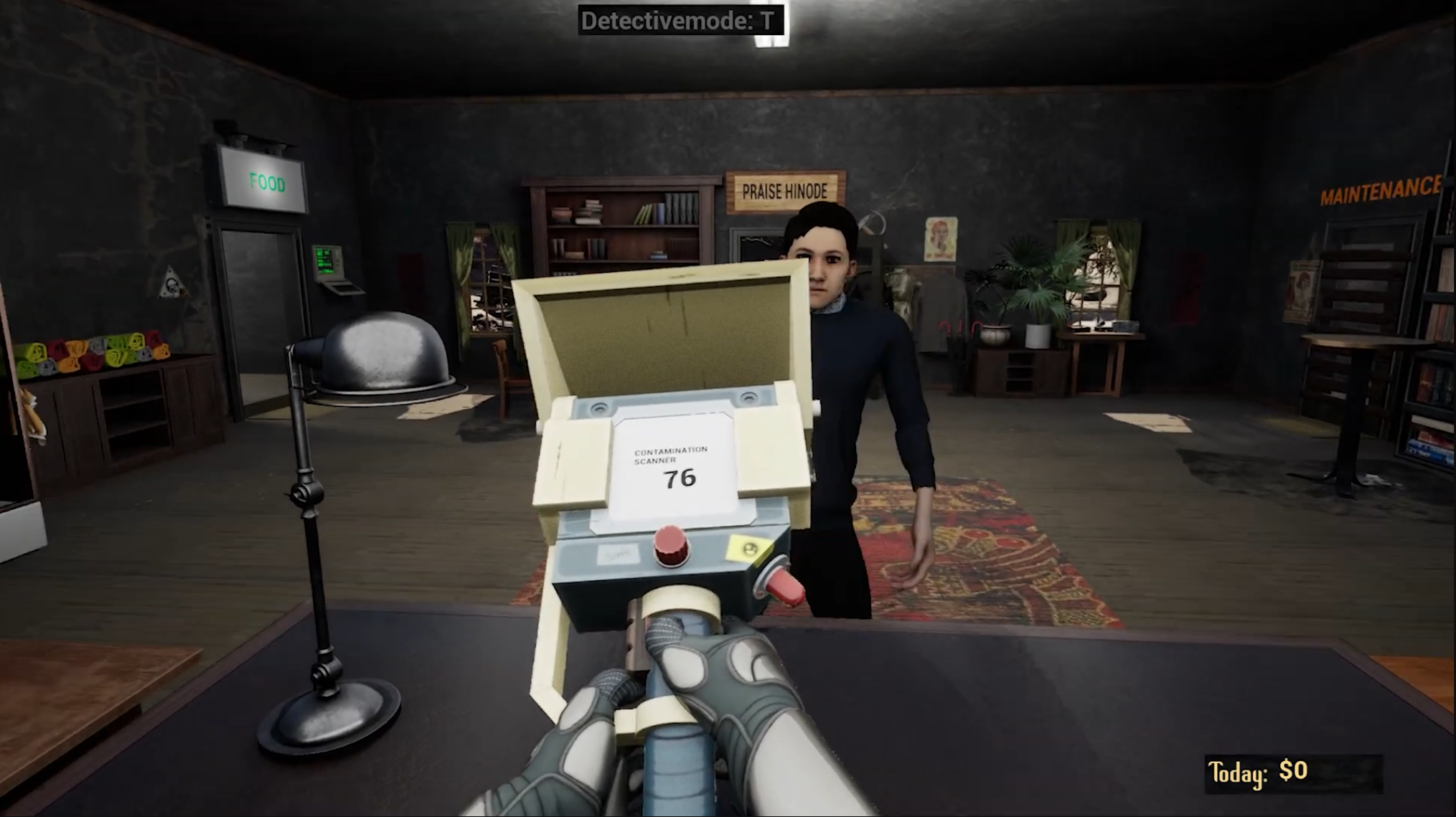
The player can check NPCs’ contamination values with the contamination scanner. The allowed contamination value can change every day.
Recruitment Test Results
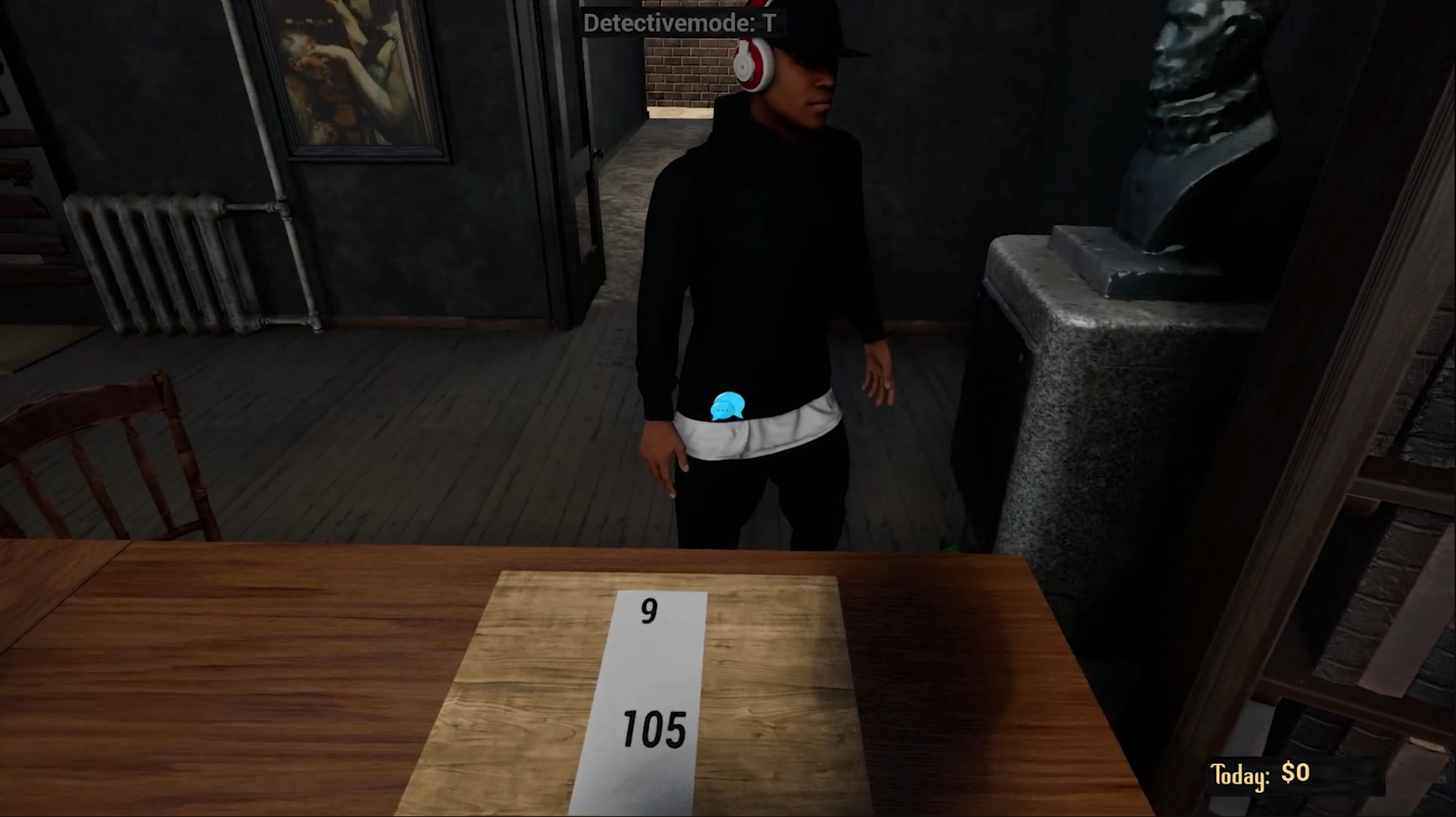
The result of the recruitment test consists of 2 numbers. Both numbers must fall within certain predefined ranges to pass the test.
Water Stamp
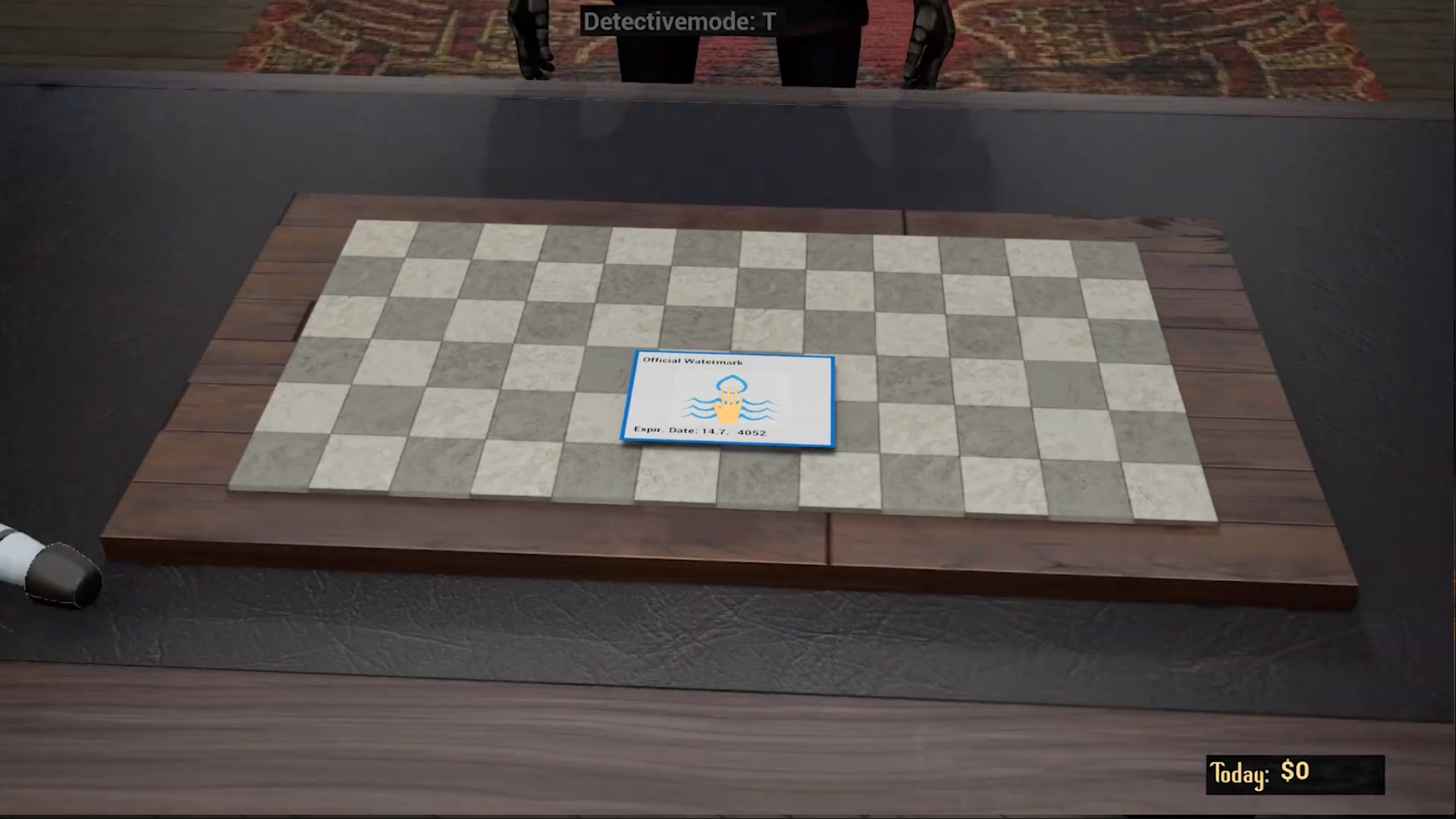
The player must check whether the stamp is authentic (the image in the center of the stamp may change) and whether it is still valid (each card shows an "valid until:" date, which must not be expired).
Database Entries
Each NPC must be asked for their name and the corresponding database entries must be checked. At the database terminal, the player can view all related database entries after entering the NPC’s name.
Unique NPCs (Examples)
Leopold Ptieza
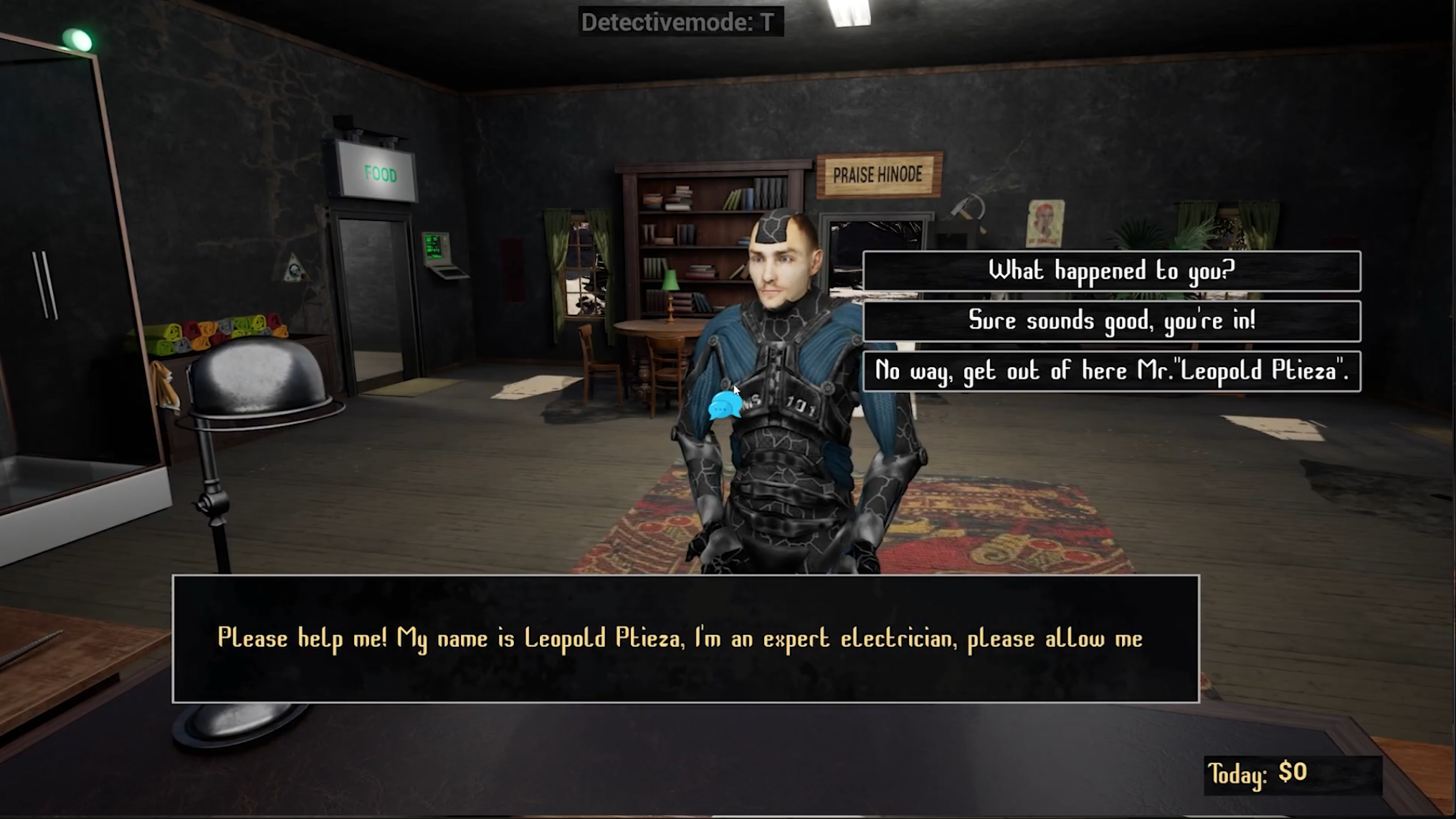
An electrician who asks to be recruited. He fails the recruitment test, but still asks to be recruited and promises the player that it will be worth it.
Crazy Wastelander
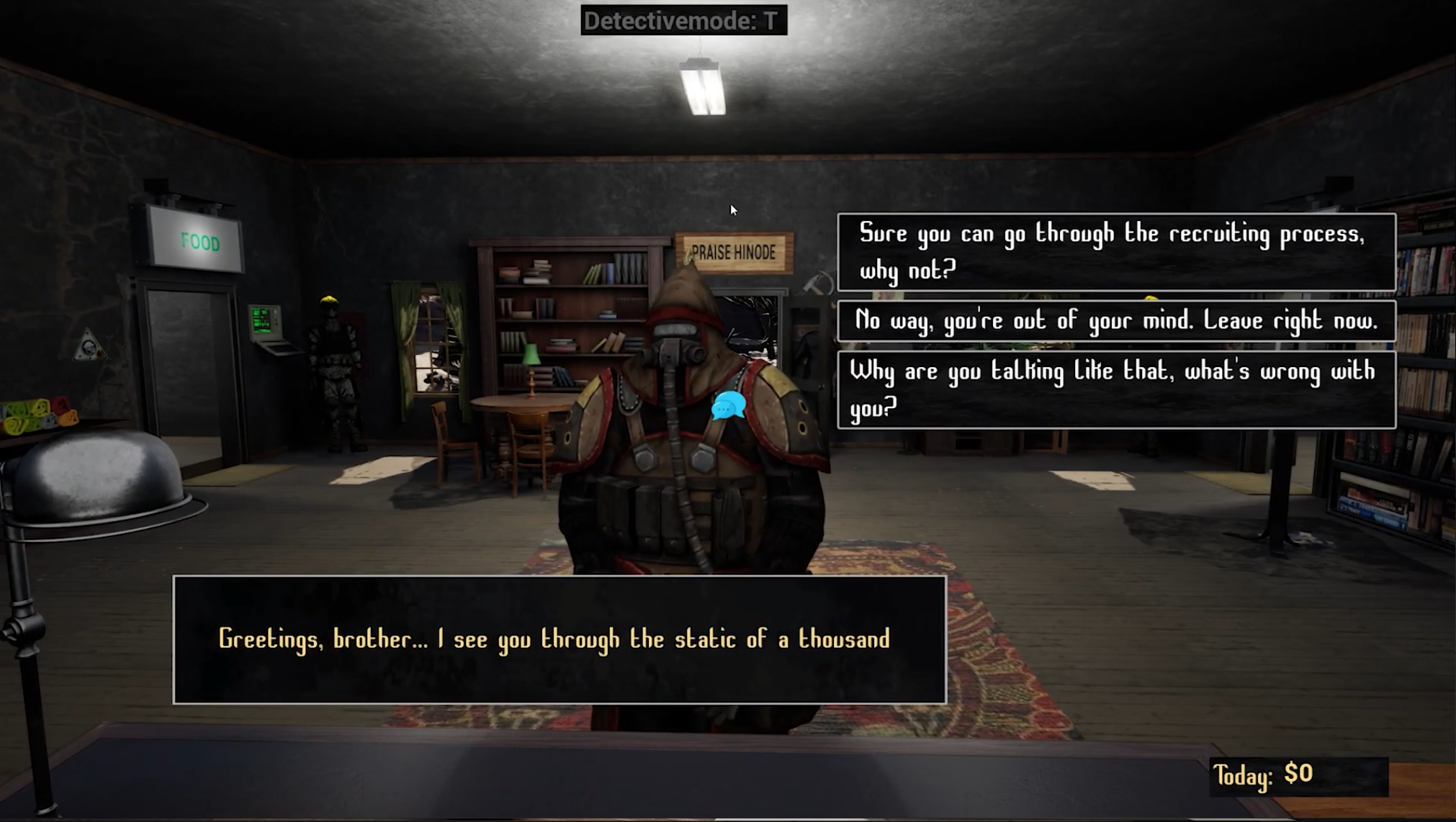
A crazy wastelander who is barely understandable. He wants food, but has a contamination value that is far too high. The wastelander warns the player of great misfortune if his request for food is ignored.
John Kero (Bandit Leader)
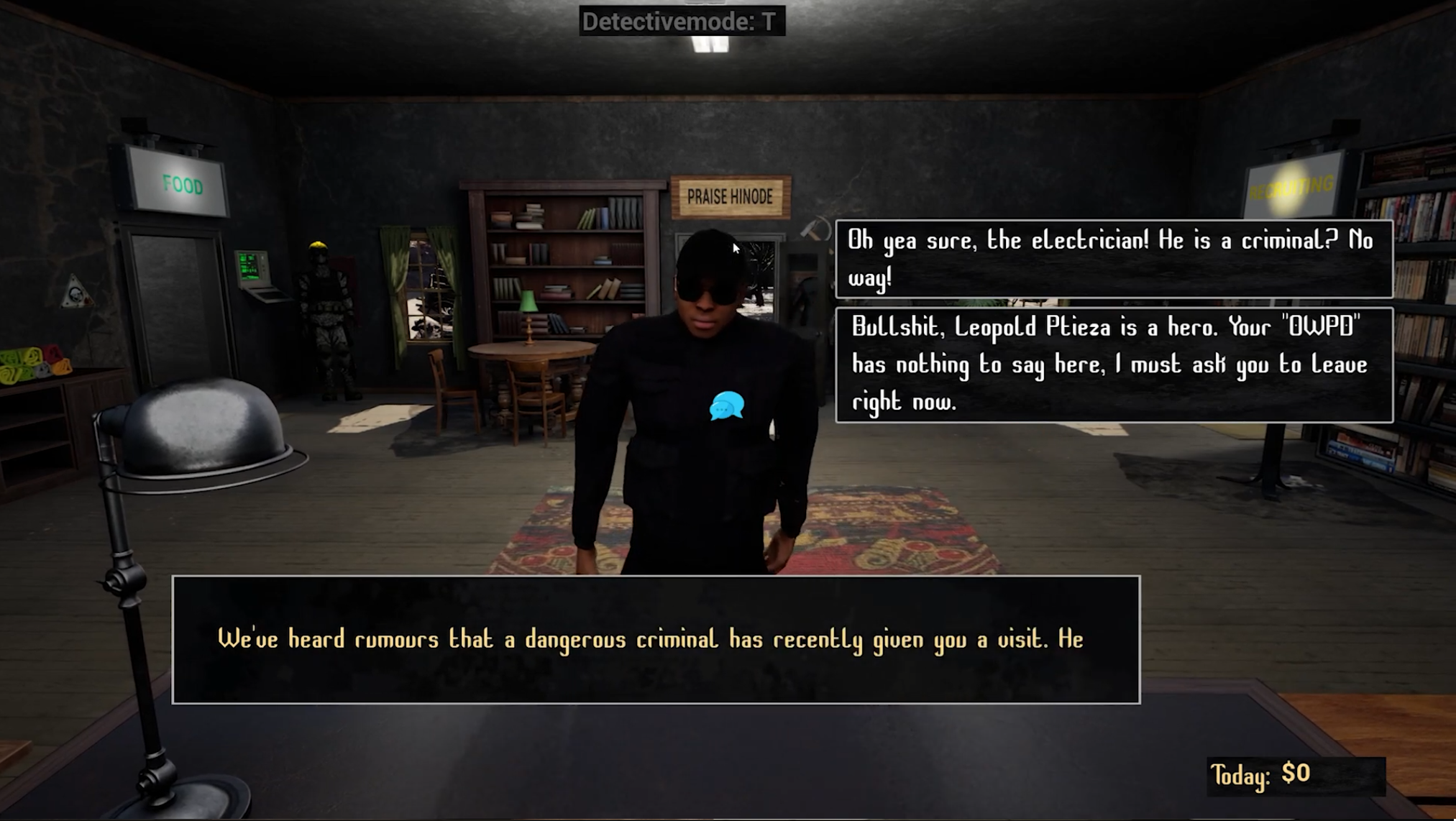
A bandit leader who claims to belong to a supposed wasteland police force and is looking for "Leopold Ptieza."
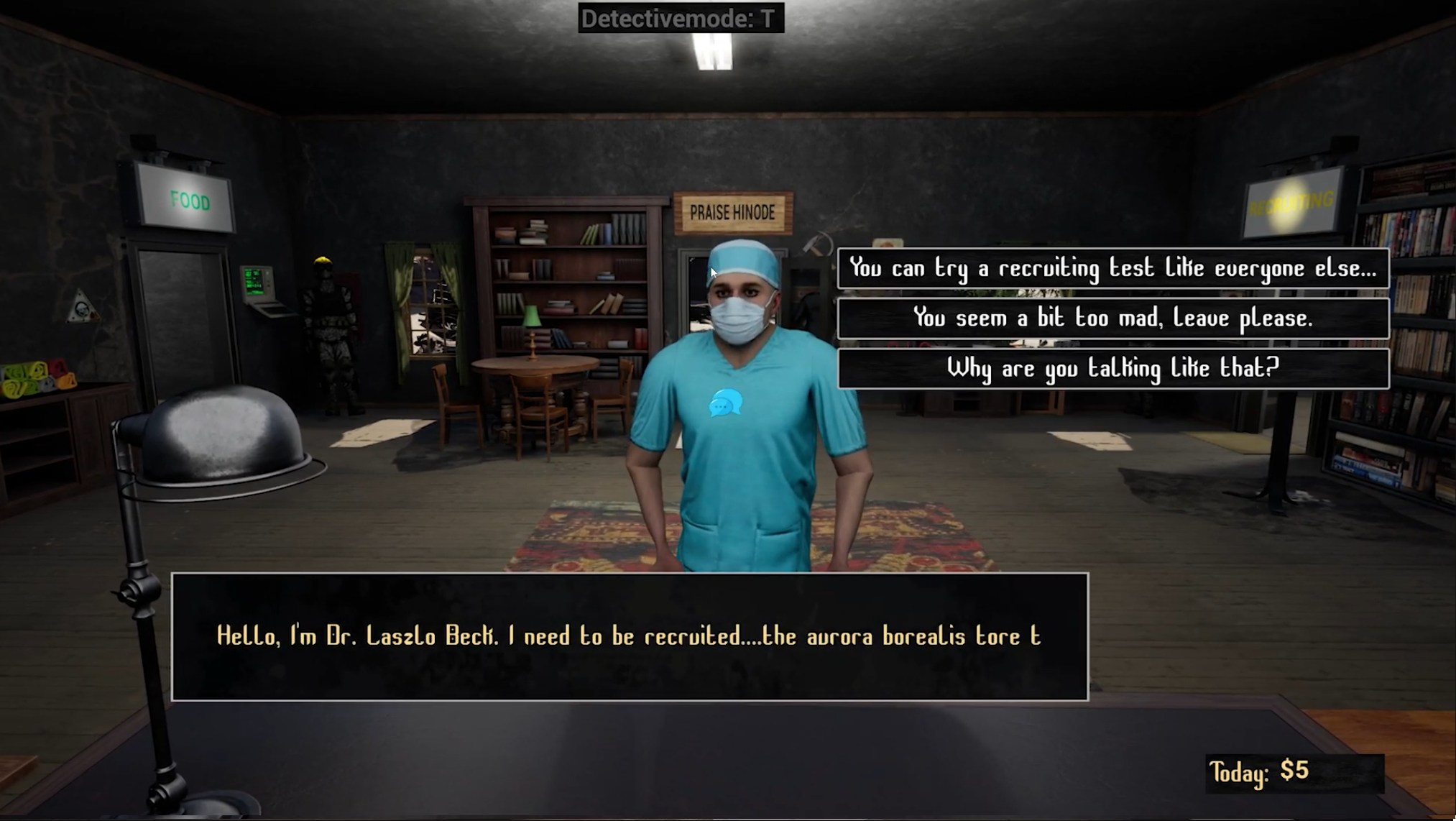
Dr. Laszle Beck
A very good doctor, but he does not pass the recruitment test.
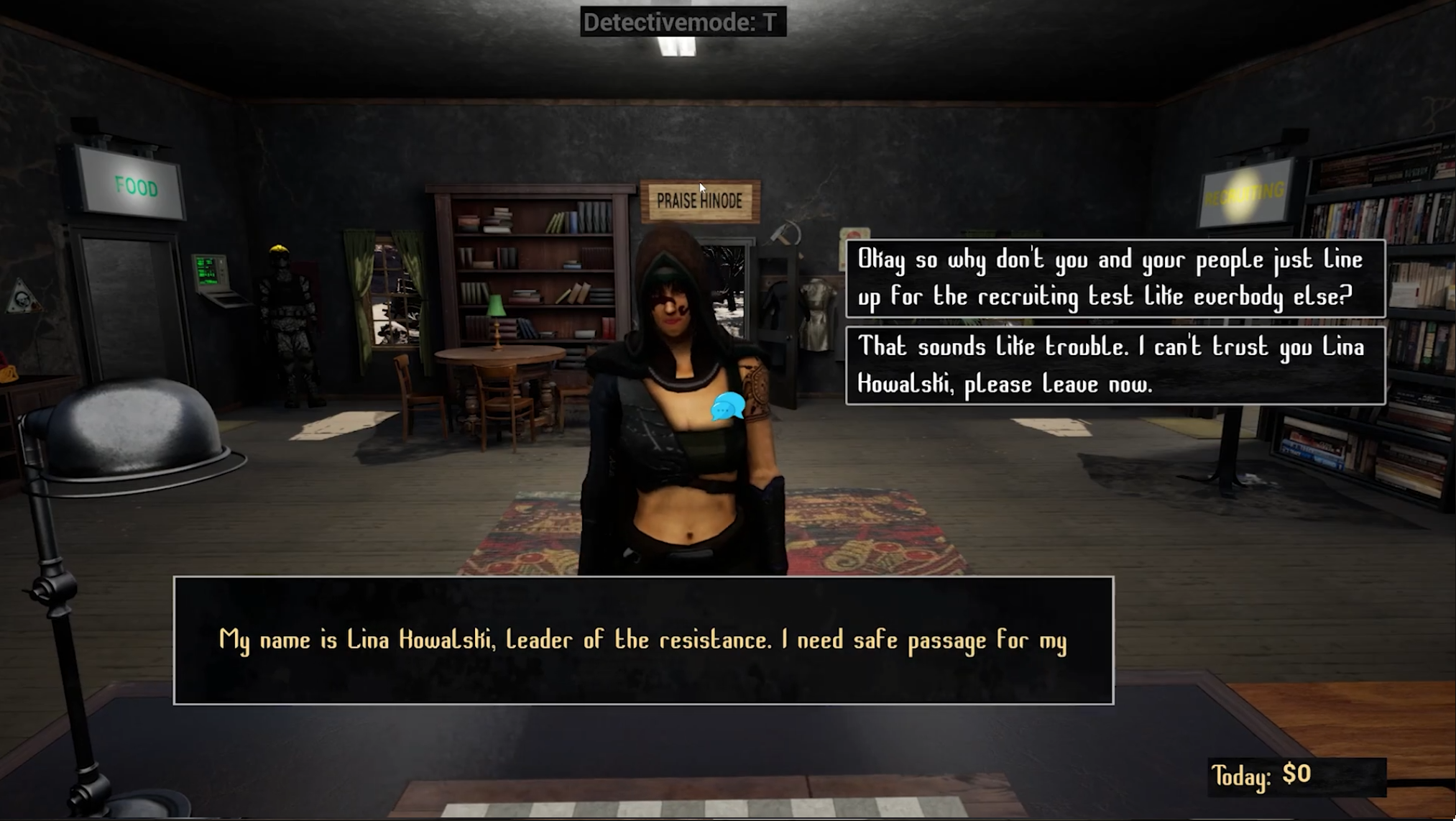
Lina Haul (Resistance Leader)
The leader of the resistance against Hinode’s regime. She asks the protagonist for help so she can begin infiltrating Hinode.
Technical Details
- Engine: Unreal Engine (Blueprints / Visual Scripting)
- Source Control: GitHub.
- Entwicklungszeit: 2 Monate (01.01.2025 - 01.03.2025)
- Solo-Projekt
Challenge → Solution Approach
- Challenge: Create a complete prototype in 2 months.
- → Solution: Strict time management: setting myself the deadline of being done with code/programming in January helped immensely in having enough time to add 3D models/worldbuilding and still implement many new unique NPCs.
- Challenge: Create a robust, dynamic dialogue system.
- → Solution: I used the "Data Table" class properly for the first time. This class helped me a lot in creating new dialogues quickly and easily.
Learnings
- The "Data Table" class can be very helpful for storing many different values for the same purpose.